
Cardiology & Rhythmology · Paris
Cardiologists and heart rhythm specialists in Paris
Cardio Check-up is a cardiology and heart rhythm centre in Paris. Screen better to prevent better: a team of specialists for your cardiac check-up, screening and personalised heart care.
- Team of specialists
- EHRA-affiliated rhythmology expertise
Why Cardio Check-up
Preventive, innovative and personalised medicine
A public health challenge
17.9M
lives lost worldwide every year. Cardiovascular disease is the leading cause of death, according to the World Health Organization.
Cardio Check-up, a cardiology centre in Paris, was created to address a major public health challenge: cardiovascular prevention. Our team identifies and treats risk factors early, before they become disease.
- Hypertension
- Sleep apnoea
- Cholesterol
- Diabetes
- Overweight
Our conviction
Screen better to prevent better, and prevent better to treat better.
Preventive
Prevention is at the centre of everything we do, from screening risk factors to follow-up.
Innovative
A connected, digital cardiology centre in Paris that uses artificial intelligence to support screening, exam analysis and patient follow-up.
Personalised
Every check-up and every treatment is adapted to your profile, your history and your own risk factors.
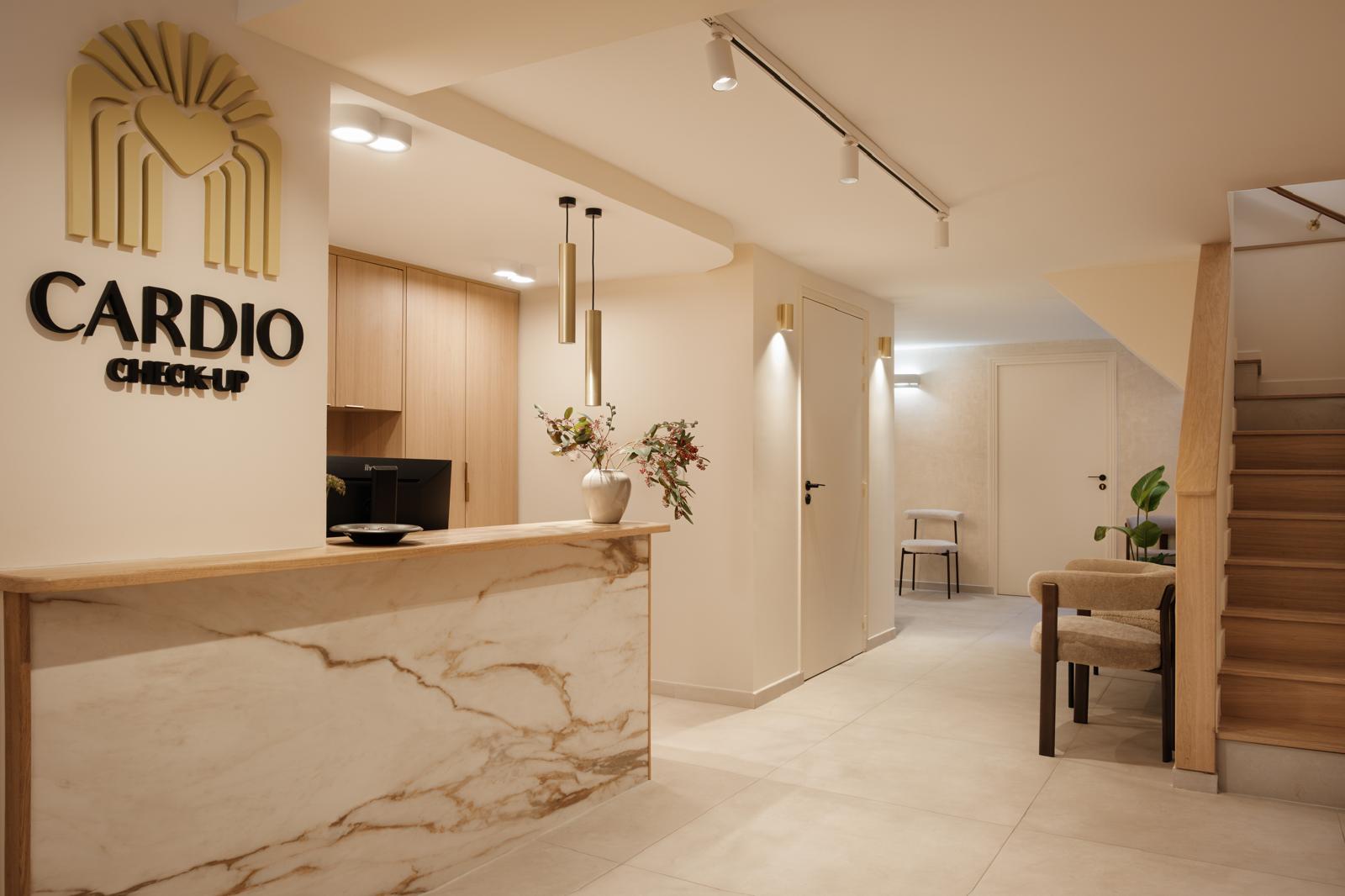
A clean, considered space within a remarkable architectural centre, designed to pair medical excellence with comfort for every patient.
Our Board
A medical team, one shared standard
A close-knit team of specialists in Paris, united by one standard: attentive, personalised cardiovascular care, from screening to treatment.



Our Examinations
The right test for every situation
All our cardiac examinations in Paris, from screening to specialist follow-up: ECG, echocardiogram, Holter monitoring, stress test and vascular Doppler.
Frequently asked questions
Everything you need to know before your appointment
Cardio Check-up is a cardiology and rhythmology practice at 29 Rue Bayen, in the 17th arrondissement of Paris. Its team of specialists performs cardiac check-ups, ECGs, echocardiograms, Holter and ambulatory blood pressure monitoring, and manages heart rhythm disorders, including atrial fibrillation. The centre covers cardiovascular prevention through to specialist rhythm follow-up, all at one location.
Cardiovascular disease (heart attack, arrhythmia, stroke) is the leading cause of death worldwide, with around 17.9 million lives lost every year. In response, Cardio Check-up was created to address a major public health challenge: cardiovascular prevention. By identifying and treating cardiovascular risk factors early (high blood pressure, sleep apnoea, dyslipidaemia, diabetes, overweight), we enable tailored, personalised care and limit the onset of associated comorbidities. Our conviction is simple: screen better to prevent better, and prevent better to treat better.
At Cardio Check-up, prevention is at the centre of everything we do. Our connected, digital practice uses many artificial intelligence tools to support screening, exam analysis and the follow-up of each patient. This is personalised medicine, where every check-up and every treatment is adapted to your profile, your history and your own risk factors.
Our team welcomes you with kindness and availability, attentive to your symptoms, your questions and your needs. The care we provide places listening and support at the heart of every consultation.
Cardio Check-up welcomes you in a clean, considered space within a remarkable architectural centre, designed to pair medical excellence with comfort for every patient.
If you're not sure where to start, call our secretariat rather than guessing. Describe your main symptom, whether that's palpitations, breathlessness, chest discomfort or simply wanting a routine check, and we'll point you to the right appointment: a general cardiology consultation, a full cardiac check-up, or, if a rhythm problem seems likely, a heart rhythm specialist. Most patients start with a consultation or a cardiac check-up; more specific tests (Holter, MAPA, sleep polygraphy, stress test) are then added if the cardiologist finds a reason for them. New patients are welcome, and the secretariat prioritises anything that sounds urgent but isn't a 15/112 emergency.
We're at 29 Rue Bayen in the 17th arrondissement, a five-minute walk from Charles de Gaulle-Étoile and close to the Ternes metro, easy to reach from across Paris and the wider Île-de-France region. At this single address you can have a full cardiac check-up, an ECG, an echocardiogram, Holter monitoring, ambulatory blood pressure monitoring and a consultation with a heart rhythm specialist. One central location means less travel on exam day and easy follow-up visits. The secretariat gives you access details when you book.
Yes. We welcome new patients, whether you need a first check-up, a second opinion, or ongoing follow-up. To book as a new patient, use the online booking on this page or call the secretariat, who will match you with the right specialist depending on your reason for consulting. Bringing previous results (ECG, echocardiogram, blood tests) helps us build a complete picture from the first visit. Because the practice covers prevention through to specialist rhythm care, you can stay within the same team as your needs evolve.
It is worth seeing a cardiologist in several situations: when you have symptoms (chest pain, palpitations, fainting, unusual breathlessness, swelling of the legs); for the follow-up of a known heart condition; if you have cardiovascular risk factors (high blood pressure, smoking, inactivity, diabetes, significant stress, a family history of cardiovascular disease); for cardiovascular prevention, typically from the age of 50 to 55; and before resuming a sporting activity. Depending on your symptoms, we may arrange a cardiac check-up, an ECG, an echocardiogram or a consultation with a heart rhythm specialist. If pain is intense and lasting, or you faint with loss of consciousness, that's an emergency: call 15 (SAMU) or 112 rather than booking a routine appointment.
We perform the full range of cardiac and vascular tests in one place: ECG, trans-thoracic echocardiogram, Holter (ambulatory rhythm recording), MAPA (ambulatory blood pressure monitoring), overnight sleep polygraphy, stress test and vascular Doppler ultrasound. That means we can move from a first check-up to a precise diagnosis without sending you elsewhere. If a rhythm disorder is suspected, our heart rhythm specialist interprets the recordings and defines treatment. Most examinations are painless and need little or no preparation.
Yes. We diagnose and manage heart rhythm disorders, including atrial fibrillation (fibrillation auriculaire) and extrasystoles, through our heart rhythm specialist working alongside the wider team. Assessment usually starts with a cardiologist, an ECG and a Holter recording; the rhythm specialist then evaluates the risk and the best management. Because atrial fibrillation can be silent, regular screening matters, particularly with risk factors present. Managing it combines treating the rhythm itself and reducing stroke risk, so having a cardiologist and a heart rhythm specialist in the same team keeps that followed end to end.
No. The ECG, echocardiogram, Holter monitors, vascular Doppler and sleep polygraphy are all painless and use no radiation. Only the stress test involves real physical effort, always under continuous medical supervision, adapted to your ability and stopped at the first abnormal sign. For most tests you simply lie relaxed while the tracing or images are recorded. If anything worries you beforehand, the secretariat can explain exactly how a test works: an examination you understand is always easier to go through.
Most examinations here need no preparation: you can eat and take your usual medication before coming in. A cardiac check-up (consultation, ECG, echocardiogram) requires no fasting. Only the renal artery and abdominal aorta vascular Doppler are best done fasting, to limit digestive gas. For a Holter or MAPA recording, come with clean, dry skin so the sensors adhere well. Bringing previous results helps us compare over time. When you book, the secretariat tells you if anything specific applies to your test.
For examinations carried out at the practice, your results are interpreted by the doctor and sent to you once the medical analysis is complete.
A prescription from your doctor is generally required to carry out complementary examinations. If in doubt, our secretariat is available to advise you.
A cardiac check-up and routine follow-up are for planned, non-urgent care. In a life-threatening emergency, don't wait for an appointment: intense, lasting chest pain, fainting with loss of consciousness, or sudden severe breathlessness require calling 15 (SAMU) or 112 immediately. Chest pain spreading to the arm or jaw, with sweating, is an emergency, not a reason to book routinely. Once the acute situation is managed, we can take over follow-up and organise the right monitoring going forward.
Book an appointment
Cardio Check-up, Paris 17 · Reply within 24 to 48h